 By Louis Jones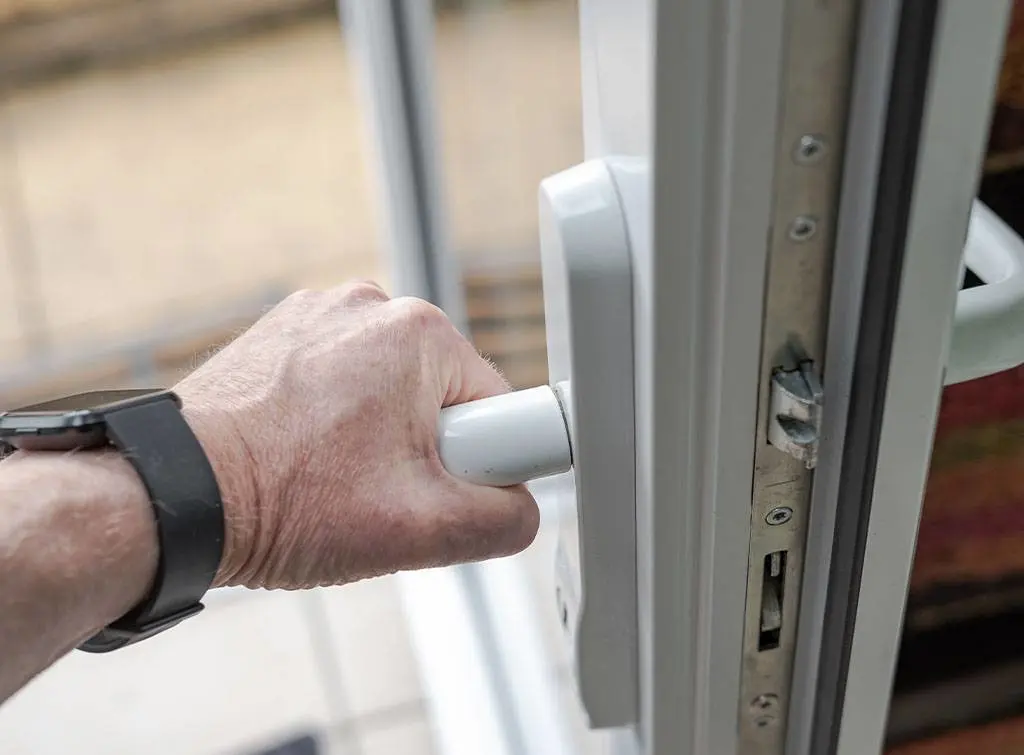
There is a fairly predictable moment in the life of a troublesome UPVC door.
The handle gets stiff. Then it gets stiffer. Somebody has to pull the door towards them while lifting the handle. A few weeks later, the key becomes awkward to turn.
At that point, everyone blames the lock.
It makes sense. The door won’t lock properly, therefore the lock must be broken.
Except quite often it isn’t.
A surprising number of apparent lock failures begin somewhere completely different. The door has dropped slightly on its hinges. The frame has moved. A locking keep is no longer aligned. On patio systems, worn rollers can change how the door sits against the frame.
The lock is simply the part complaining loudest.
This is why proper UPVC door fault diagnosis matters before anyone starts replacing components. A new mechanism fitted to a badly aligned door can end up under exactly the same strain as the old one.
Then, six months later, everyone wonders why the problem has returned.
A useful test takes about ten seconds
There is a simple distinction that tells you quite a lot.
Open the door and operate the handle.
If the handle lifts smoothly and the locking points move freely while the door is open, but everything becomes stiff once the door is closed, there is a reasonable chance the problem involves alignment rather than an outright mechanism failure.
Not guaranteed. But it is a clue.
The locking points have to enter corresponding keeps around the frame when the door closes. If the door has dropped by only a few millimetres, those points can start striking the edges instead.
Now the homeowner has to force the handle upwards to overcome the resistance.
Do that twice and nothing much happens.
Do it twice a day for two years and you are putting a considerable amount of unnecessary load through the mechanism.
Eventually something inside may genuinely break.
By then, saying “the lock failed” is technically correct but misses most of the story.
Doors move more than people imagine
UPVC doors are not fixed permanently in exactly the same position from installation until replacement.
Hinges wear.
Buildings settle.
Frames move fractionally.
Temperature changes materials.
Heavy glass puts constant weight through the opening side of the door.
A tiny amount of movement is completely normal. Problems begin when the movement becomes enough to take the locking system outside its intended tolerances.
You can sometimes see this without any tools.
Look at the gaps around a closed door. Is the gap consistent from top to bottom? Does one corner sit noticeably closer to the frame? Are there marks where metal locking points have been scraping against their keeps?
Those little polished areas of metal can tell quite a story.
So can the noise.
A healthy multipoint lock generally operates with a fairly clean mechanical movement. Grinding, clunking and that horrible feeling of the handle bending under pressure are not characteristics worth accepting as “just an old door”.
The Yorkshire weather test
Seasonal changes complicate diagnosis because marginal doors can appear to repair themselves.
A door starts sticking badly during a warm spell in August. September becomes cooler and suddenly it behaves again.
Nothing was repaired.
The tolerances simply changed.
The same thing can happen during prolonged wet or cold periods. Seals behave differently, materials move slightly and an already borderline alignment becomes noticeable.
Older properties can add another variable.
Across West Yorkshire there are countless houses that have been extended, altered and remodelled over decades. A rear door might now sit in an opening created during an extension rather than the original structure. Small amounts of settlement are not unusual.
Again, we’re not talking about dramatic structural movement.
A door mechanism doesn’t need dramatic movement.
Millimetres are enough.
The handle gets unfairly blamed too
Handles are another favourite suspect.
Homeowners feel resistance through the handle, so buying a replacement handle seems logical.
Sometimes the handle really is worn.
But replacing it without checking why it became difficult to operate can be like replacing a worn shoe while continuing to walk with a stone inside it.
The new part experiences exactly the same underlying problem.
You occasionally see doors that have gone through several sets of handles because nobody addressed the alignment putting excessive pressure through them.
The owner naturally assumes UPVC handles are rubbish.
They’re not indestructible, certainly.
But asking one to repeatedly force a misaligned multipoint mechanism into place isn’t exactly a fair test.
Dropped doors are incredibly common
A door doesn’t need to look obviously crooked to have dropped.
The weight is constantly trying to pull the opening edge downwards. Over time, hinge wear and adjustment changes can allow that edge to sit slightly lower than it did originally.
Often the first sign is not visual.
It’s the lock.
The lower or upper locking points begin clipping their keeps. The homeowner pulls harder on the handle. Eventually the door needs a little lift before it will lock.
That’s the giveaway.
If you have developed a personal technique for locking your back door – pull it towards you, lift slightly, push with your hip, then raise the handle – the door probably needs attention.
People laugh about these routines.
Every family seems to have one.
“You have to pull it towards you first.”
“Don’t shut it too hard.”
“Lift it a bit while you turn the key.”
None of these are really operating instructions. They are symptoms.
Adjustment isn’t always the complete answer
There is another trap here.
If alignment is the problem, just adjust the hinges. Easy.
Sometimes, yes.
But there are limits.
If hinges are badly worn, adjustment may only temporarily disguise the problem. If the frame itself has moved, repeatedly adjusting the door around it can create different issues. If locking components have already been damaged through years of forcing, correcting the alignment won’t magically restore them.
This is where experience becomes useful.
You need to work out what happened first.
Was the door misaligned and that damaged the lock?
Did the mechanism begin failing internally and create the stiffness?
Have worn hinges caused the door to drop?
Has the frame shifted?
There can be several faults together on older doors.
The tempting repair is replacing whichever component looks most obviously damaged.
The better repair addresses why it became damaged.
Multipoint locks hide a lot inside the door
A standard key-operated lock is relatively easy for people to understand.
UPVC multipoint systems are different.
Turn or lift the handle and several locking elements can move simultaneously along the door edge. Depending on the mechanism, these might include hooks, rollers, mushrooms, bolts or other locking points.
All of those components need to meet corresponding positions in the frame.
That’s quite a lot happening from one handle movement.
When everything is aligned, it feels effortless.
When it isn’t, the force required at the handle can increase considerably.
This is why diagnosing stiff or failed door mechanisms by the handle alone is unreliable. The problem might be inside the gearbox, somewhere along the locking strip or entirely outside the mechanism.
Sometimes you don’t know until you inspect it.
Patio doors add another possibility
Sliding patio doors bring rollers and tracks into the equation.
A homeowner might report that the lock has become difficult to engage, but the locking issue can begin because worn rollers have allowed the entire sliding panel to sit lower than intended.
The lock and keep no longer meet correctly.
Again, the temptation is to replace the lock.
If the rollers remain worn, the new lock still has to engage against a panel sitting at the wrong height.
The same applies where damaged running gear causes a sliding door to approach the frame at a slight angle.
This is why older sliding patio door problems can become surprisingly interconnected. Rollers, tracks, alignment and locking hardware all influence how the door behaves.
Fixing one bit in isolation isn’t always enough.
Then there are the DIY adjustments
Most tradespeople have seen these.
Locking keeps moved repeatedly until the original screw holes barely hold anything.
Hinges adjusted to their absolute limit.
Pieces of plastic wedged into frames.
Striker plates filed down because the locking point was catching.
It may get the door working again.
For a while.
The problem with repeatedly moving keeps to accommodate a dropped door is that you’re following the fault rather than correcting it.
The door drops.
Move the keep.
It drops slightly more.
Move the keep again.
Eventually the geometry is miles away from where it started and the original problem remains.
There is also a security question.
Locking components are positioned where they are for a reason. Randomly grinding bits away until the handle moves smoothly is not necessarily an improvement.
Smooth operation and correct operation are not always the same thing.
Don’t keep forcing it because it still works
This is probably the most expensive habit.
A stiff handle becomes normal surprisingly quickly.
People compensate unconsciously.
The first week they notice the resistance. Three months later, they automatically pull harder without thinking about it.
Nothing appears urgent because the door still locks.
Until it doesn’t.
Internal gearboxes contain components that are repeatedly loaded every time the door operates. Excessive resistance increases that load.
Eventually the weakest part gives up.
Then you have a door that may be stuck shut, stuck open or impossible to secure.
That is considerably less convenient than arranging an adjustment when the handle first started feeling strange.
A key that won’t turn can still be an alignment issue
This one catches people out.
If the key becomes difficult to turn only when the door is closed, people naturally assume the cylinder is failing.
Try it with the door open.
If the key and locking operation suddenly become perfectly smooth, ask why.
The closed door is introducing resistance somewhere.
Perhaps the handle isn’t reaching its full position because a hook is binding against a keep. The key then cannot complete its normal movement because the mechanism hasn’t reached the position it expects.
Change the cylinder and you haven’t changed that.
This doesn’t mean every stiff key is an alignment problem. Cylinders fail too.
The point is that diagnosis should come before parts.
Not afterwards.
Old mechanisms create another headache
There is a practical reality with older UPVC doors that homeowners rarely think about until something breaks.
Parts disappear.
Manufacturers change designs. Product ranges are discontinued. Companies disappear entirely. Replacement gearboxes may have different dimensions or require compatible alternatives.
A twenty-year-old door can still be structurally excellent while containing a mechanism that hasn’t been manufactured for years.
That doesn’t automatically mean replacing the complete door.
It does mean identifying components becomes more important.
Sometimes compatible replacement parts exist.
Sometimes individual sections can be dealt with.
Sometimes the age and condition of the whole system finally makes replacement more sensible.
But jumping straight from “the lock feels stiff” to “you need a new door” is a fairly substantial leap.
Security shouldn’t depend on a knack
There is a slightly more serious side to all this.
If a multipoint lock isn’t engaging correctly because the door is misaligned, security can be affected before complete failure occurs.
The handle might lift.
The key might turn.
That doesn’t necessarily prove every locking point has engaged exactly as intended.
This matters particularly with doors where homeowners have learned to manipulate the panel into position before locking it.
If you need to lift the door physically to make the locks line up, something has moved.
It’s worth finding out what.
Not panicking about it.
Just fixing it.
The best repairs can look surprisingly uneventful
There is something satisfying about a door that has required an elaborate locking ritual for years suddenly operating normally again.
Close door.
Lift handle.
Turn key.
Done.
No shoulder against the frame. No lifting the handle with both hands. No warning visitors that “this door’s a bit funny”.
Often the improvement comes from addressing several small things rather than finding one spectacular broken component.
Alignment corrected.
Keeps checked.
Mechanism inspected.
Hinges adjusted where appropriate.
Everything working together again.
That’s how the door was supposed to operate in the first place.
So if a UPVC door becomes harder to lock, the lock is certainly worth investigating.
Just don’t assume it’s guilty before you’ve looked at everything around it.
Quite often, it’s been taking the blame for somebody else’s problem.