 By Louis Jones
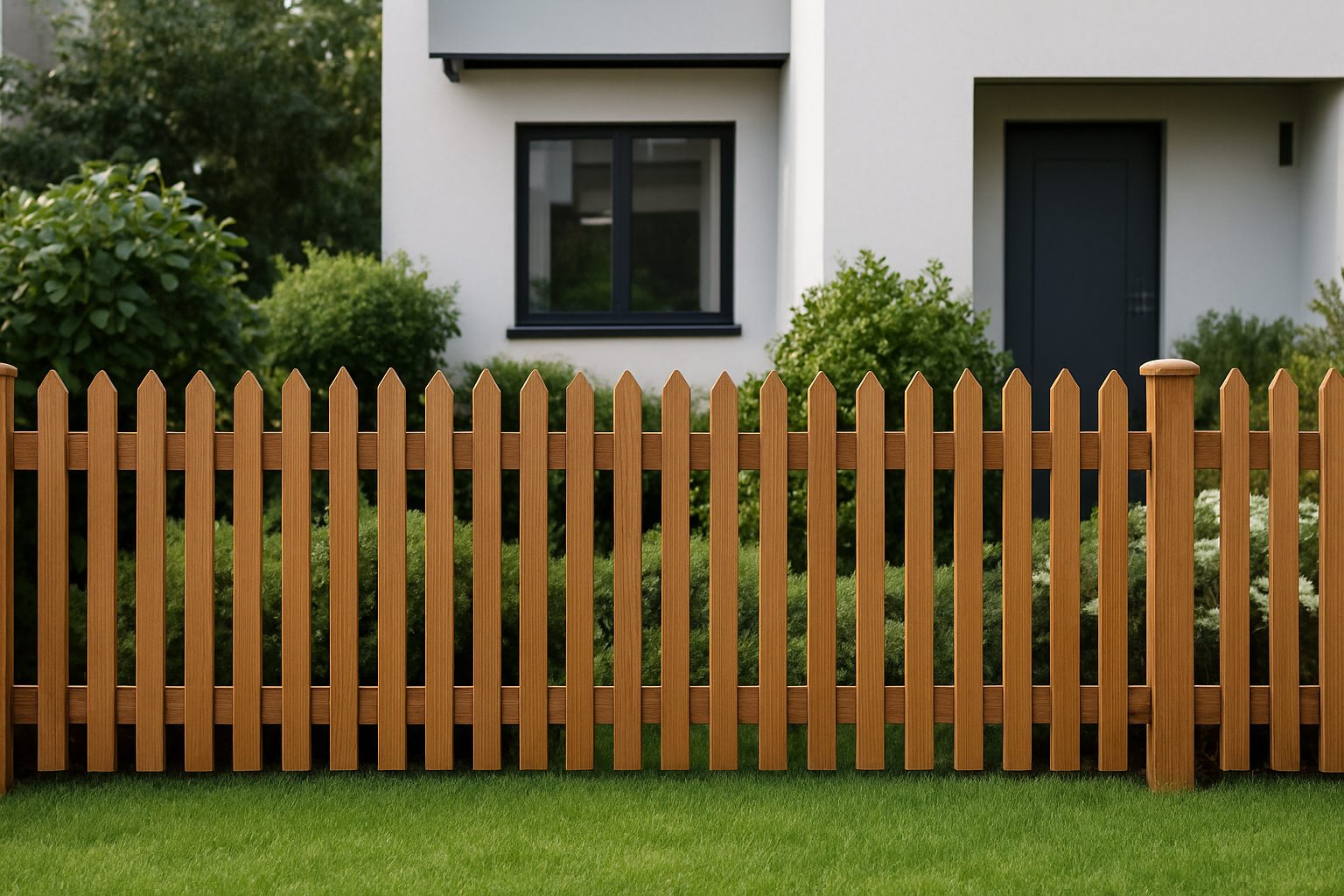
For years, garden design seemed to be moving in one direction. Everything had to be sleek, grey and modern. Horizontal slats, dark composite panels and perfectly straight lines became the look everyone wanted.
Now there’s a growing interest in something rather less complicated.
Traditional timber fencing is finding its place in modern gardens again. Featheredge boards, picket fences, natural wood finishes and simple closeboard panels are all worth another look, especially when homeowners want something that feels more in keeping with their property.
Having worked with garden fencing across Leeds and West Yorkshire for many years, I can see why.
Some of the best fences I’ve come across weren’t particularly fashionable when they were installed. They were simply well built, suited the house and did their job without drawing attention to themselves.
Twenty years later, some are still standing.
There’s a lesson in that.
For anyone considering garden fencing in Leeds, traditional designs deserve serious consideration before committing to whatever happens to be popular on social media.
Modern Gardens Don’t Always Need Modern Fencing
There’s nothing wrong with contemporary fencing.
Horizontal slatted panels can look excellent around modern extensions, garden offices and newly landscaped patios. Composite systems also have their place, particularly where low maintenance is a priority.
But modern fencing doesn’t automatically make a garden look better.
I’ve seen expensive decorative panels installed around Victorian terraces where the finished result looked completely out of place. The materials were good. The workmanship was fine. The design simply didn’t suit the property.
Traditional fencing tends to be more forgiving.
Natural timber works with brick, stone, established planting and older garden walls. It also sits comfortably alongside modern landscaping without dominating everything around it.
A simple featheredge fence behind a well-planted border can look just as smart as a more expensive decorative system.
Sometimes better.
The trick is knowing when to leave things alone.
Featheredge Fencing Never Really Went Away
Ask an experienced fencing contractor which timber system they trust for an exposed garden and featheredge will probably be near the top of the list.
There’s good reason for that.
Featheredge fencing uses overlapping vertical boards fixed to horizontal rails. When properly installed, it creates a strong, continuous boundary that can cope well with ordinary British weather.
It isn’t a new idea.
That’s rather the point.
The system has been used for generations because it works.
A properly built featheredge fence allows the installer to adjust board spacing, rail positions and post specifications to suit the site. It can also follow changes in ground level more neatly than some prefabricated panels.
That’s particularly useful around Yorkshire properties where gardens rarely seem to be as level as they first appear.
I’ve worked on sites where the ground rises and falls several times along a relatively short boundary. Trying to force identical panels into those conditions can leave awkward gaps or unnecessarily high sections.
Building the fence on site often produces a cleaner result.
It takes more care, but you can see the difference.
Natural Timber Has Something Painted Panels Often Lose
Timber changes as it ages.
Freshly treated boards may begin with a green or brown tint. Over time, exposure to sunlight and rain changes the surface colour.
Eventually, untreated natural finishes often develop a soft grey appearance.
Some homeowners hate that.
Others specifically want it.
Personally, I think weathered timber can look excellent against established planting, especially around older properties.
It feels settled.
That doesn’t mean leaving every fence to fend for itself. Timber still needs suitable treatment, good drainage and occasional inspection.
But there’s no rule saying a fence must be painted dark grey to look modern.
In fact, heavily painted fencing can create its own maintenance problems.
Once a coating starts peeling, the entire boundary can look tired quite quickly. Repainting also becomes awkward when shrubs and climbing plants have grown against the boards.
Natural timber finishes can be easier to live with, provided the wood was suitable for outdoor use in the first place.
Picket Fencing Is More Useful Than People Think
Picket fencing tends to remind people of cottages and traditional front gardens.
That’s understandable, but it has practical uses beyond appearance.
A low picket fence can define a front boundary without making the property feel closed off. It works well around small gardens, pathways and areas where maintaining visibility matters.
It also allows wind to pass through more freely than a solid panel.
That can be useful in exposed positions.
Of course, picket fencing isn’t suitable where complete privacy or significant security is needed.
You wouldn’t normally choose it for a rear boundary overlooking several neighbouring gardens.
But not every boundary needs to be six feet high.
I’ve seen small front gardens made to feel cramped by solid fencing that simply wasn’t necessary.
Replacing it with a lower, more open design can change the appearance of the entire property.
And you don’t need particularly expensive materials to achieve it.
Traditional Fencing Works Particularly Well With Older Homes
Leeds has an enormous variety of housing.
Victorian terraces, Edwardian semis, stone cottages, interwar houses and modern estates can all sit within a relatively small area.
Their gardens are just as varied.
A fencing style that suits a contemporary townhouse in the city centre might look completely wrong around a stone property in one of the older suburbs.
This is where traditional designs often have an advantage.
They don’t fight the architecture.
Closeboard fencing works well with brick and stone boundaries. Simple timber gates complement older paths and garden walls. Picket fencing can preserve the character of traditional front gardens.
Even a standard vertical boarded fence can look surprisingly good when the proportions are right.
One thing I dislike is seeing homeowners spend a fortune on fashionable fencing without considering the house behind it.
The garden and property should look as though they belong together.
Not as though two completely different design ideas have collided.
The Quality of Timber Matters More Than the Style
Traditional fencing has one obvious weakness.
Poor-quality timber.
A cheap panel doesn’t become durable simply because it uses a familiar design.
Timber thickness, treatment, framing and fixing methods all influence how well a fence performs.
Pressure-treated timber is generally preferable for structural components, but the treatment needs to be appropriate for where the wood will be used. Timber intended for ground contact needs a different level of protection from boards fitted above ground.
It’s worth asking about that distinction.
I’ve removed fencing where the visible panels were still reasonably sound but the posts had rotted through near ground level.
The homeowner assumed the whole fence was poor quality.
In reality, the problem was concentrated in the parts carrying the load.
When comparing fencing services, ask about post materials, timber treatment and the construction method rather than judging everything by the appearance of the finished panels.
Those details matter far more after ten winters than they do on installation day.
Traditional Fences Can Be Easier to Repair
This is one advantage that rarely gets much attention.
Many traditional fencing systems are relatively straightforward to repair.
If a featheredge board splits, it may be possible to replace that board rather than an entire panel.
A damaged rail can sometimes be repaired without dismantling the whole boundary.
Individual components are also generally easier to source than parts for discontinued decorative systems.
That doesn’t mean every repair is worthwhile.
If the posts have failed or several rails are badly rotten, replacing individual boards is unlikely to solve much.
But a well-built traditional fence offers more repair options than some homeowners realise.
I’ve seen people replace complete runs of fencing because two or three boards looked tired.
A closer inspection might have saved them a considerable amount of money.
Yorkshire Weather Favours Sensible Construction
Traditional fencing isn’t automatically stronger than contemporary fencing.
The construction determines that.
A poorly installed featheredge fence can fail just as quickly as a badly fitted decorative panel.
Around Leeds, ground conditions can be particularly awkward. Heavy clay holds water through wet periods, while dry spells can cause it to contract.
Posts need sufficient depth and suitable support.
For a typical domestic fence, around 600mm is a common starting point, although taller fences, exposed locations and difficult ground may require deeper foundations.
Wind exposure also matters.
A sheltered garden behind neighbouring houses experiences very different forces from a boundary overlooking open fields.
Then there’s drainage.
Timber panels shouldn’t sit directly against wet soil. Gravel boards help keep the main fencing clear of ground moisture, while sensible landscaping prevents water from collecting around the base.
None of this is especially glamorous.
It’s what keeps a fence standing.
Woven Panels Bring a Softer Look to Garden Boundaries
Not every traditional design needs to be heavy or completely solid.
Woven willow and hazel panels offer a different appearance, particularly in cottage gardens and informal outdoor spaces.
Their natural texture works well alongside shrubs, wildflowers and established planting.
They can also provide attractive screening around seating areas or vegetable gardens.
There are limitations, though.
Natural woven materials generally need more protection from persistent moisture and may have a shorter service life than robust structural timber fencing.
They’re not always suitable for exposed boundaries either.
I’d be cautious about using lightweight woven panels as the main boundary in a particularly windy garden.
As decorative screens in sheltered areas, however, they can work beautifully.
It’s a case of using the material where it makes sense.
The Cost of Traditional Fencing Isn’t Always Lower
There’s an assumption that traditional fencing must be cheaper.
Not necessarily.
Standard prefabricated panels can be relatively economical, but bespoke featheredge fencing built on site may require more labour.
Good-quality timber also costs more than lightweight budget materials.
Then there are posts, gravel boards, concrete, fixings and waste removal.
Access can make a substantial difference to the final price.
A straightforward garden with a clear route from the driveway is one thing. Carrying materials through a narrow terraced house and removing old concrete foundations by hand is quite another.
The cheapest initial installation isn’t always the best value.
A strong fence that lasts fifteen or twenty years may work out considerably cheaper than one that needs replacing after seven.
That’s worth considering before choosing materials based entirely on the quotation.
Traditional Doesn’t Have to Mean Old-Fashioned
One of the more interesting developments in garden design is how traditional materials are being used in contemporary settings.
Natural featheredge fencing beside porcelain paving.
Simple timber gates with modern black ironmongery.
Vertical boarding behind architectural planting.
Low picket fences around carefully designed front gardens.
These combinations work because they don’t try too hard.
They allow the fencing to provide structure while the landscaping creates the character.
Dark stains and modern finishes can still be used where they suit the property, but they aren’t essential.
Sometimes the most effective change is simply choosing better timber and keeping the design restrained.
Think About the Garden in Ten Years
This is the question I’d encourage more homeowners to ask.
Not what the fence will look like next weekend.
What will it look like after ten years of weather, planting growth and everyday use?
Will the design still suit the house?
Can damaged components be replaced?
Will the finish need regular attention?
Are the posts suitable for the ground conditions?
Does the fence allow enough room for plants to mature without trapping moisture against the timber?
These are far more useful questions than asking which style happens to be popular this year.
An experienced fencing contractor should be able to explain the practical differences between materials and construction methods without insisting that the most expensive option is always best.
Sometimes composite makes sense.
Sometimes a modern slatted system is exactly right.
And sometimes a straightforward timber fence is the best answer.
Some Designs Earn Their Place by Lasting
I’ve seen plenty of garden trends come and go.
Some looked fantastic when they first appeared. Others were awkward to install, difficult to maintain or poorly suited to the properties where they ended up.
Traditional fencing has survived those changes for a reason.
It can be practical, attractive and relatively easy to maintain. More importantly, the better systems have already proved themselves across generations of British gardens.
That doesn’t mean every homeowner should choose featheredge or picket fencing.
It means familiar designs shouldn’t be dismissed simply because they’re familiar.
There’s something satisfying about returning to an old property and finding a fence installed many years earlier still standing straight.
The timber has weathered. The garden has grown around it. Perhaps a few boards have been replaced along the way.
But the fence still belongs there.
That’s a better measure of good garden design than whatever happens to be fashionable this autumn.
Key Takeaways
- There is a growing interest in traditional timber fencing as a counter to modern, sleek designs in garden aesthetics.
- Featheredge fencing, known for its durability and adaptability, remains a favored choice among experienced contractors due to its effectiveness in handling diverse garden conditions.
- Natural timber fencing can enhance the visual appeal of gardens by developing a weathered look that complements older properties, contrary to the preference for painted finishes.
- Picket fencing, while often associated with traditional designs, serves practical purposes in defining boundaries without obstructing visibility or airflow in smaller gardens.
- Traditional fencing styles typically align better with the architecture of older homes, making them a more suitable choice in historically varied neighborhoods like Leeds.